The Lion (1966)
some places never really close
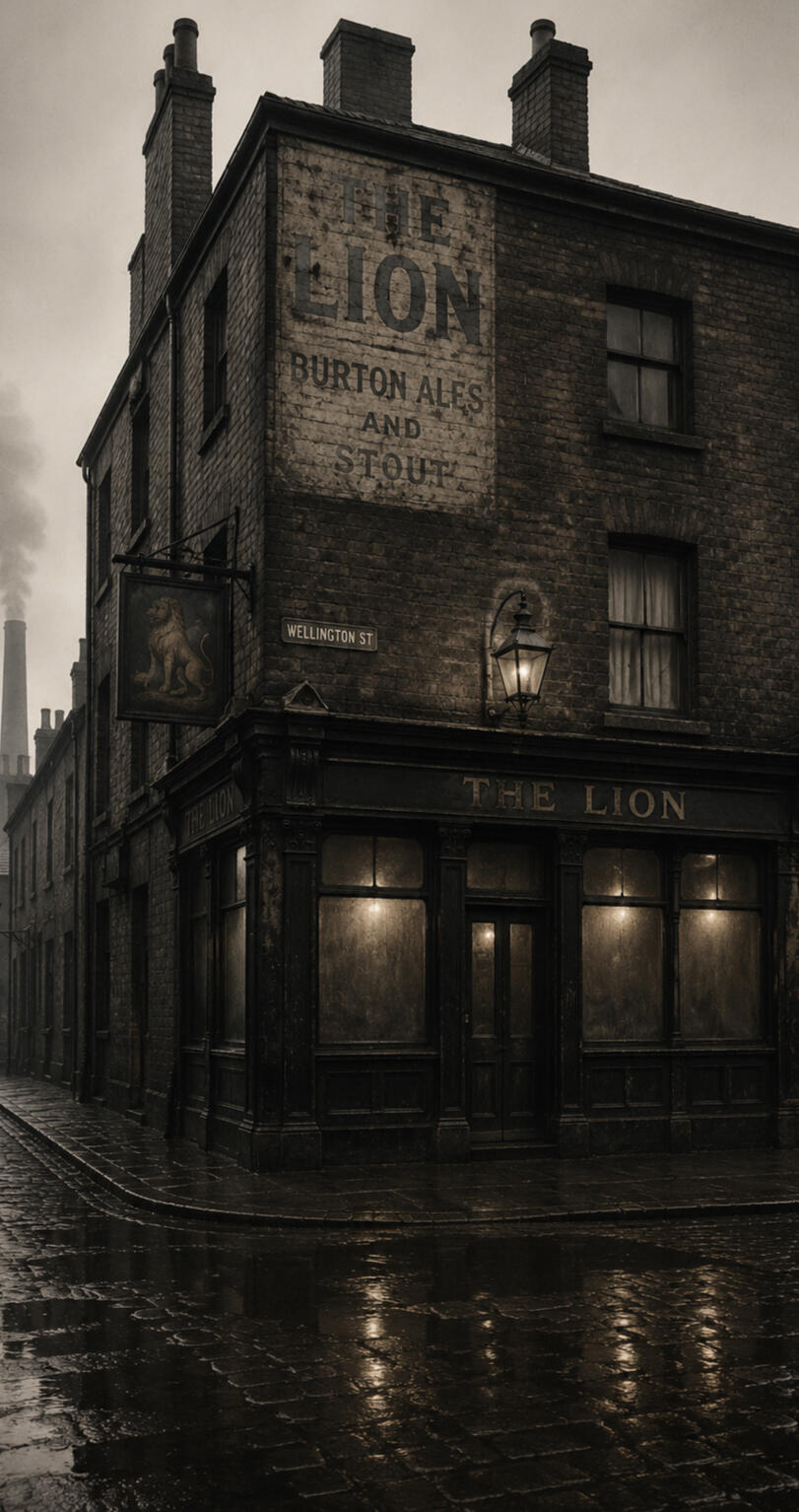
Released in 1966, The Lion was constructed around a single day in the life of a public house serving an industrial district. Although its doors officially opened and closed at fixed times, the pub’s routines were governed by the surrounding factories, with customers arriving before work, after work and at hours when most of the town was asleep.Jon “Jig” Crocker plays Arthur Renshaw, the landlord who provides the only continuous presence as one group of customers replaces another. Men finishing the night shift drink alongside those beginning their day, wives arrive looking for husbands, union representatives hold private conversations in the back room and former workers continue to occupy the same seats long after leaving the factory.Rather than building towards a single event, The Lion revealed the connections between its characters through fragments of conversation overheard by Renshaw. He knows who owes money, who has lost his job, who is avoiding home and which disputes require intervention. By the following morning, the customers have changed and many of the previous day’s difficulties remain unresolved, but the life of the pub continues around them.
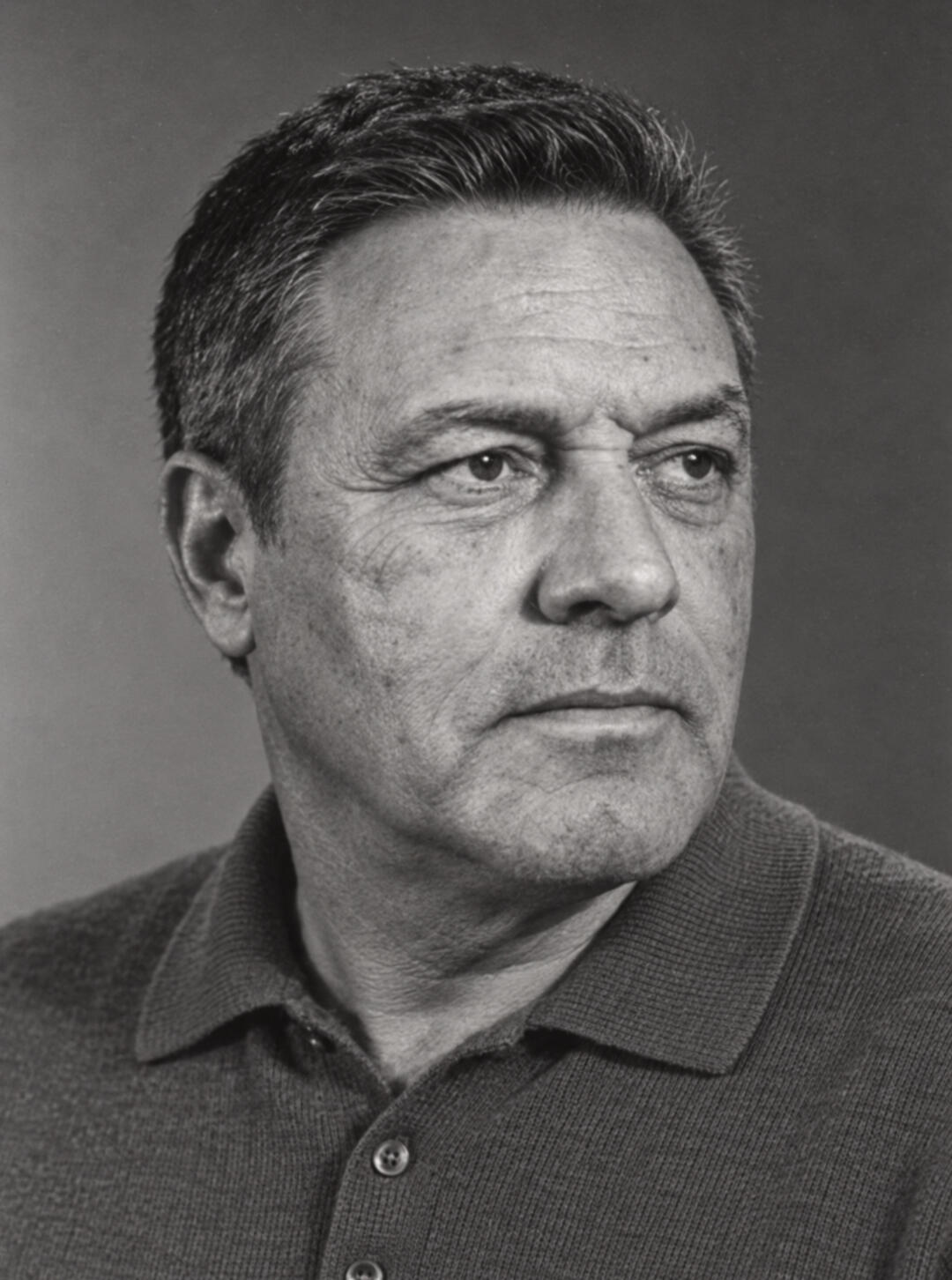
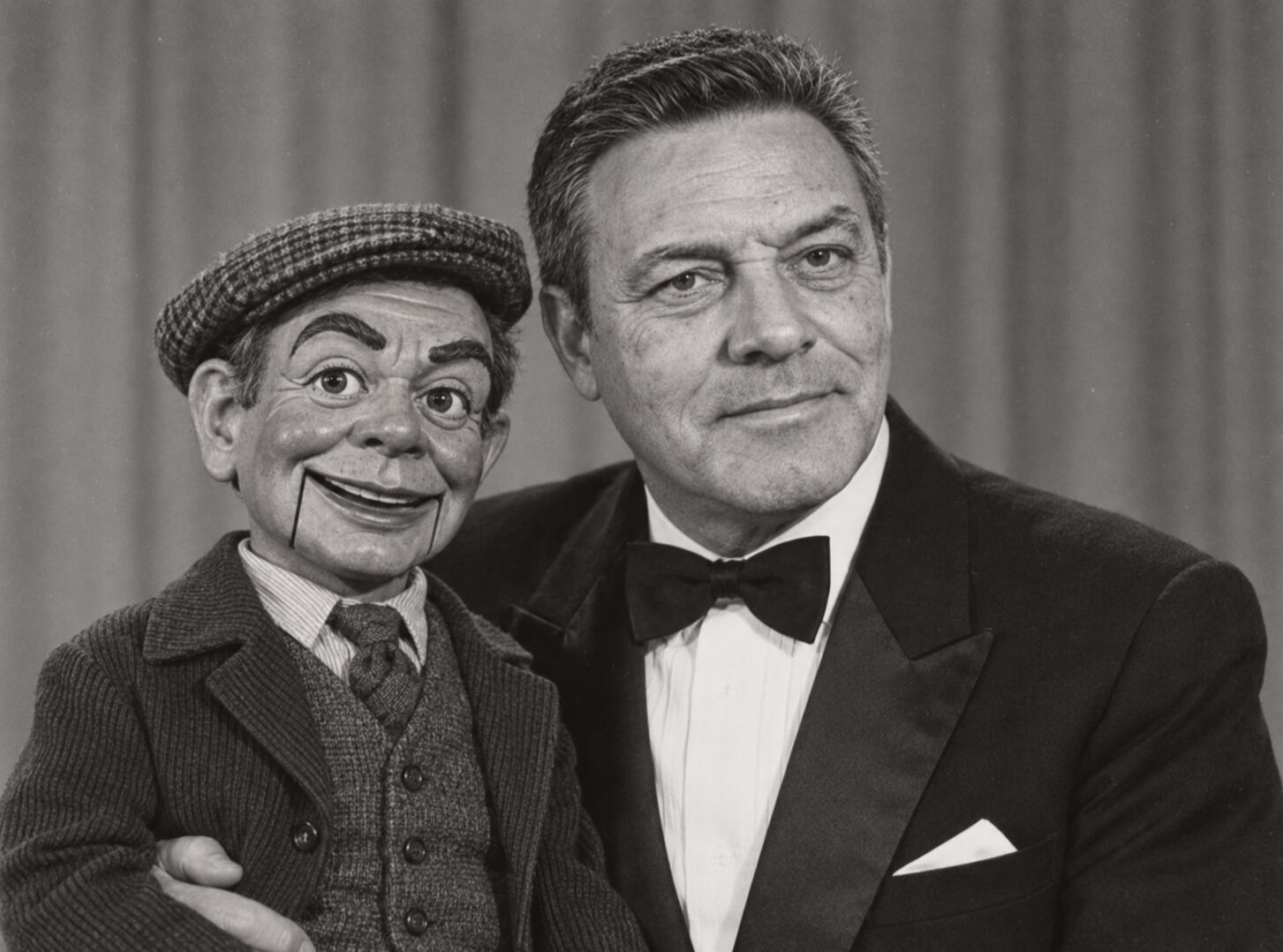
Jon “Jig” Crocker (1907–1973)Jon Crocker was born in Bromley in 1907. The nickname “Jig” was acquired during his early years and remained with him throughout his life, although its origin was something he repeatedly refused to explain.After being expelled from school, he worked in a succession of commercial and clerical positions across southern England. He began performing as an amateur ventriloquist during the 1930s, initially at local concerts and charitable events. His principal character, The Gaffer, was a permanently dissatisfied factory foreman whose opinions on work, marriage and modern life were considerably less restrained than Crocker’s own.Crocker moved north after the war and gradually became a familiar performer on the working men’s club circuit. His southern accent distinguished him from many of the acts around him, while The Gaffer spoke with a broad northern voice assembled from expressions Crocker heard during his travels. The contrast became the basis of the act: audiences frequently appeared more willing to accept the dummy as a local than the man operating him.Although he occasionally appeared on radio and in televised variety programmes, Crocker remained primarily a club performer. He preferred audiences close enough to answer back and became particularly skilled at allowing The Gaffer to respond to hecklers. Fellow performers remembered him as meticulous about timing and deeply irritated by anyone referring to ventriloquism as a novelty act.His only substantial film role came in 1966, when director Peter Colne saw him performing at a club in Bolton. Colne cast him as Arthur Renshaw, the landlord at the centre of The Lion. Crocker had little previous acting experience, but his years spent observing audiences from club stages made him particularly effective as a man who listened far more than he spoke.Crocker initially found filming frustrating. He was accustomed to controlling the rhythm of a performance and disliked waiting for lighting, camera positions and repeated takes. Colne nevertheless valued his stillness and resisted suggestions that the character should be given more dialogue. Much of Renshaw’s authority came from Crocker’s ability to suggest that he already knew how every conversation in the pub would end.The critical response to his performance brought offers of further character roles, usually as publicans, foremen or club entertainers. Crocker declined most of them and returned to live work, explaining that a film audience was “too quiet to trust.” He continued touring with The Gaffer until shortly before his death.He died at home with his family on 17 October 1973 while watching England’s World Cup qualifier against Poland. He was sixty-six. Notices of his death appeared in club newsletters across the North, several of which reported that The Gaffer had also been retired.Although The Lion remained his only significant screen appearance, Crocker’s performance preserved something rarely recorded on film: the watchful assurance of a performer shaped not by drama school or repertory theatre, but by decades spent facing working men’s club audiences at close quarters.
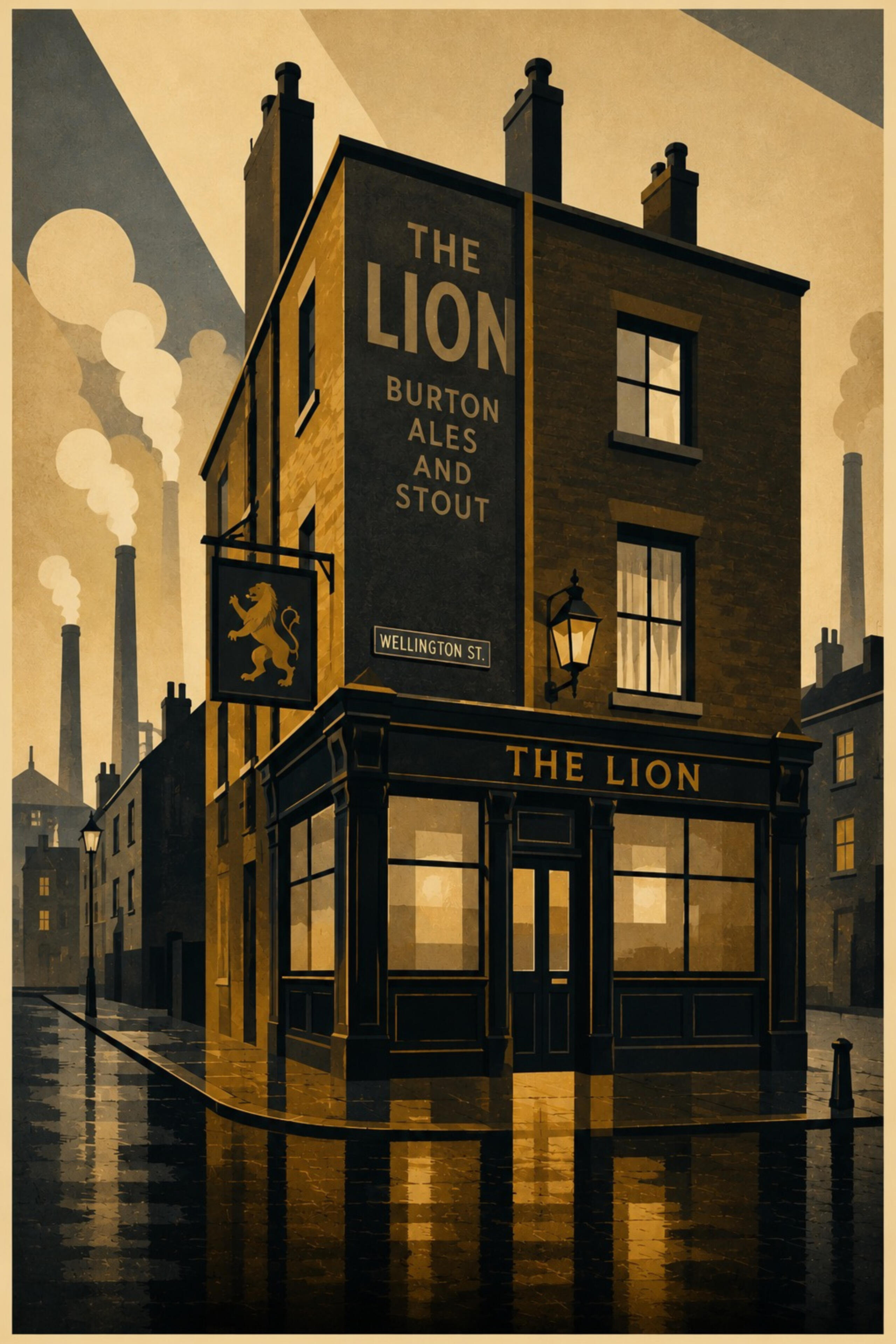
The Lion (Northern Deco)Olive James placed the public house at the centre of its industrial neighbourhood, surrounded by chimneys, terraces and empty streets. The building is reduced to broad areas of black and amber, its illuminated windows providing the only suggestion of activity.The factory smoke is rendered as a series of pale, rounded forms, contrasting with the hard angles of the pub and the shafts of light crossing the sky. Reflections on the wet pavement extend the building beyond its physical boundaries.There are no customers or workers in the image. Their presence is suggested instead by the lights inside The Lion, which remain burning while the streets around it are temporarily empty.Available exclusively through FCSF, this artistic interpretation is available unframed on 240 gsm art paper and measures 16 x 20 inches.
What did the critics think?
Upon release, The Lion received respectful rather than enthusiastic reviews. Critics generally admired its observation of working life, although several questioned whether its succession of conversations amounted to a complete story.Film Review described it as:“A quiet, observant film about the people in between the shifts and the silence.”The Manchester Evening News praised Jon “Jig” Crocker’s performance:“Crocker does remarkably little and misses remarkably little. His landlord appears to know every customer’s business, yet understands that much of it is safer left unmentioned.”The Stage was surprised by the assurance of his first substantial film appearance:“Mr Crocker has the stillness of a man accustomed to letting somebody else do the talking, an unusual quality in a leading performer, but exactly the one this picture requires.”The Daily Sketch was less patient:“People enter a public house, discuss their troubles and leave. The landlord wipes the counter. Then another shift arrives and does much the same.”The film attracted modest audiences but performed particularly well in northern industrial towns, where several cinemas retained it beyond its original booking. Although never widely released, The Lion later became one of the most highly regarded productions from the studio’s final year.
From the archive
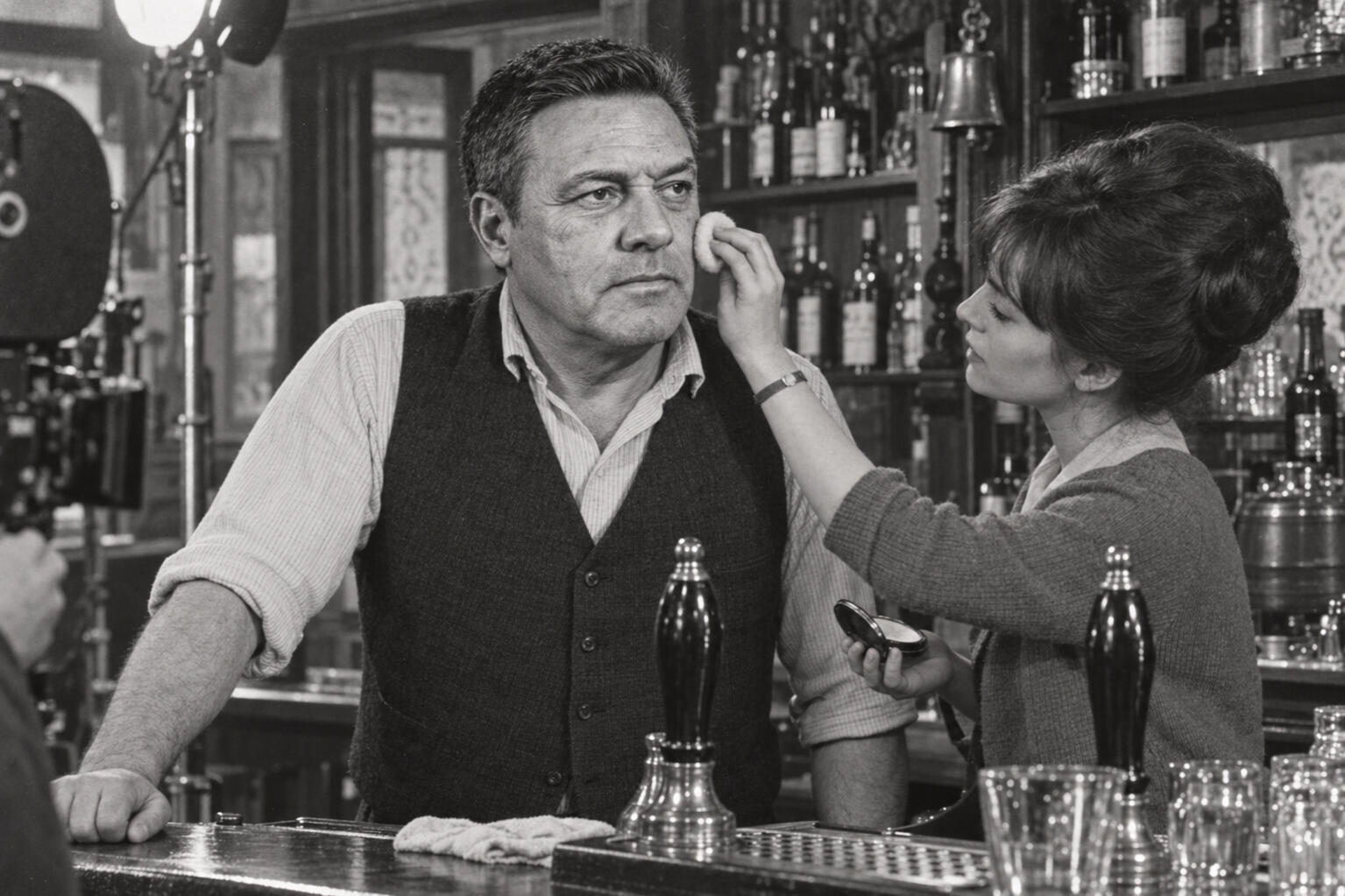
A production report records that filming ended forty minutes early one afternoon after Jon brought The Gaffer onto the set.However, the report offers no further explanation.
Publicity shot from the archive
The artwork of Reg Baines
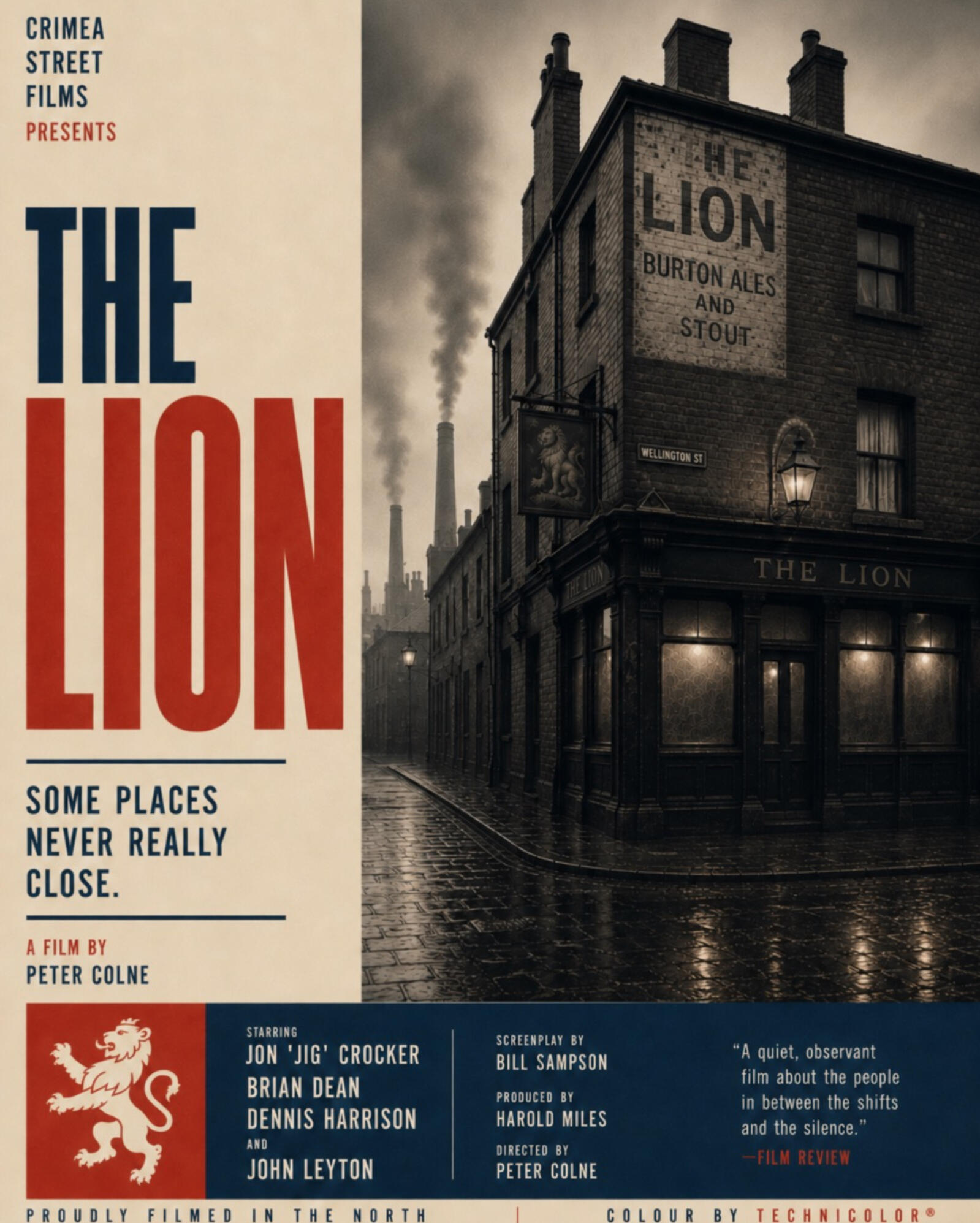
The original posters created by Reg Baines are synonymous with the studio and are very much part of its history.They would have been seen throughout the North of England outside cinemas, on hoardings and in places such as train stations.Most of them were damaged in a fire at the studio in late 1966, but we are delighted to now work with Parbold-based artist Brian Astley.Each poster is faithfully reproduced on 240 gsm art paper and available unframed in its original 16 × 20-inch format.
Further Exploration
Discover the other films we focus on this month and come back soon for a new selection.